

Pizza
160.00৳
Here is some information about pizza:
- Origin: Pizza has ancient roots, but the modern pizza as we know it today is often associated with Naples, Italy. The Margherita pizza, a classic with tomato, mozzarella cheese, and basil, was created in honor of Queen Margherita of Savoy in the late 19th century.
Description
Here is some information about pizza:
- Origin: Pizza has ancient roots, but the modern pizza as we know it today is often associated with Naples, Italy. The Margherita pizza, a classic with tomato, mozzarella cheese, and basil, was created in honor of Queen Margherita of Savoy in the late 19th century.
- Ingredients:
- Dough: The base of a pizza is typically made from wheat flour, water, yeast, salt, and sometimes olive oil. There are various styles of pizza dough, ranging from thin and crispy to thick and fluffy.
- Sauce: Tomato sauce is the most common base, but white pizzas use olive oil, garlic, or cream-based sauces. Tomato sauce is often seasoned with herbs and spices.
- Cheese: Mozzarella cheese is the classic choice, prized for its meltability and mild flavor. Other cheeses like cheddar, parmesan, and goat cheese are also used, and some gourmet pizzas feature unique cheese combinations.
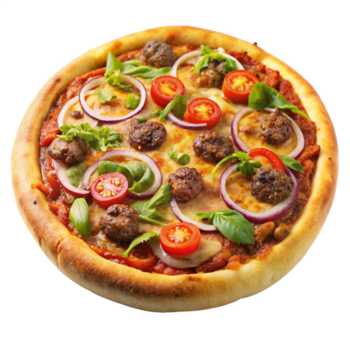
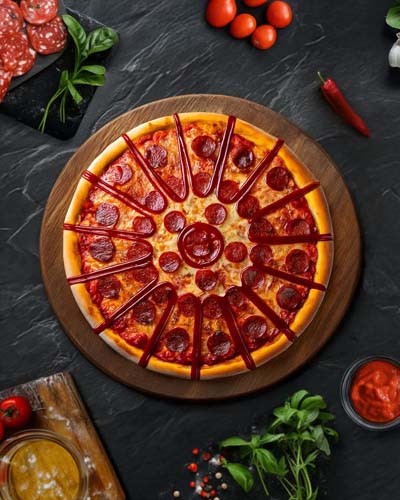
- Toppings: The topping options are nearly endless. Popular choices include pepperoni, sausage, mushrooms, onions, bell peppers, olives, tomatoes, and fresh basil. Creative toppings like pineapple, BBQ chicken, and even dessert pizzas with chocolate and fruit are also enjoyed.
- Cooking Methods: Pizzas can be cooked in various ways:
- Wood-fired ovens: Traditional Neapolitan pizzas are often cooked in extremely hot wood-fired brick ovens, giving them a distinctive charred crust and smoky flavor.
- Conventional ovens: Most home pizzas are baked in conventional ovens at high temperatures (usually around 450-500°F or 232-260°C).
- Pizza stones: Using a pizza stone or pizza steel in your oven can help replicate the results of a wood-fired oven.
- Styles:
- Neapolitan: Thin, soft, and chewy crust, often with simple toppings.
- New York: Large, foldable slices with a slightly thicker, chewy crust, usually with traditional toppings.
- Chicago: Known for its deep-dish pizza with a thick, buttery crust and layers of cheese, toppings, and sauce.
- Sicilian: Square or rectangular with a thick, fluffy crust and toppings spread to the edge.
- Thin-crust: Thin and crispy, popular in various regions with diverse toppings.
- Global Popularity: Pizza is incredibly popular worldwide and has adapted to regional tastes. It’s a common fast-food item and is also enjoyed in upscale restaurants.
- Pizza Chains: Many pizza chains have gained international recognition, such as Domino’s, Pizza Hut, Papa John’s, and Little Caesars.
- Variations: Besides the classic round pizza, there are also calzones (folded pizzas), stromboli (rolled and stuffed pizzas), and pizza pockets.
- Cultural Significance: Pizza is often associated with social gatherings, parties, and casual dining. It has become a symbol of comfort food and is widely enjoyed by people of all ages.
- Health Considerations: While delicious, pizza can be high in calories, saturated fats, and sodium, depending on the toppings and preparation. However, healthier versions with whole wheat crusts and lots of vegetables are also popular.
- Pizza Around the World: Different countries have their own unique variations of pizza, such as Japan’s Okonomiyaki pizza, India’s Tandoori pizza, and the Turkish Lahmacun, to name a few.
In summary, pizza is a versatile and beloved food enjoyed by people around the world, with a rich history and countless variations to suit various tastes and preferences. Whether you prefer a classic Margherita or a loaded deep-dish pizza, there’s a slice for everyone to enjoy.